
What is PTC Heater ?
PTC heaters are constant temperature heating elements with automatic temperature control function. There is no need for a thermostat or other temperature control mechanism like nichrome wires, so there is no need to worry about abnormal temperature rise or wire breakage.
There is no thermal deflection in case using bimetallic elements, and no switching noise.
A constant temperature is obtained by applying a voltage. In addition, it is small, lightweight, and easy to construct, making it a reliable heater. Since we develop from materials, we could respond to the resistance value and control temperature according to the customer's requirements.
Energy efficiency and durability
Many of our PTC heaters use a unique method of configuring a special electrode on the surface of the element and generating heat on the surface of the device. As a result, combined with our ultra-low resistance PTC material, we have been able to create high-power heaters with low thermal resistance. 12V/24V/48V DC for automotive use, 400V/800V DC for EV
It can also be used for commercial power supply at 100 V and 220 V AC.
The set temperature can also be 50~200°C.
Easy temperature control
PTC heaters utilizing the properties of PTC thermistors do not require complex temperature control devices to maintain temperature.
As the resistance value increasesthe along with temperature rises, it is possible to maintain the temperature with no conducting electrucity above a certain temperature, namely, it does not rise above a certain temperature.and keeps the same.
This kind of control is a characteristic of PTC thermistors, so there is no need to control power on or off. Therefore, there is no switching noise generated during switching.
PTC heaters can also meet the needs of those who want to heat simply by integrating parts or do not want to affect other parts of the product.
Can be heated safely
PTC heaters utilize the characteristics of PTC thermistors, so they do not allow power to pass through above a certain temperature.
Once the target temperature is reached, no more energy will be supplied, so the temperature will not be higher than expected.
The characteristics of PTC heaters are that they do not overheat abnormally without complextemperature control, and are safe.
There is no need to use a fuse to prevent abnormal currents.
PTC heaters could also be used to increase product safety.
Small size and wide configurable temperature
Maximum Technology's PTC heaters are characterized by their small size and wide configurable temperature range.
According to its small size, it can be bult-in many products.
In addition, the configurable temperature range is wide from 10°C ~ 250°C, making it possible to use it in variety of applications
PTC heaters are used in a variety of ways
Here are some of the products and utilize examples using PTC heaters.
| PTC Heater Product Information | |
| Warm Air Heater | Warm air heater uses a warm air heater as a heat source |
| Warm up Heater for Liquid | Fluid heating heater with automatic temperature control for fluid heating |
| Plate Type Heater | Flat heater is easy to install for direct heating |
| Heater for Anti-Freeze | Anti-freeze heaters are used to prevent freezing in cold regions |
| Anti-fog and de-icing heater for automotive cameras | Anti-fog heater used to prevent fogging of lenses |
| Heater for lithium ion battery of automobile and stationary | Heaters for lithium-ion batteries are used for heating lithium-ion batteries in cold regions, etc |
Features of PTC Heater
Automatic Temperature Control Function
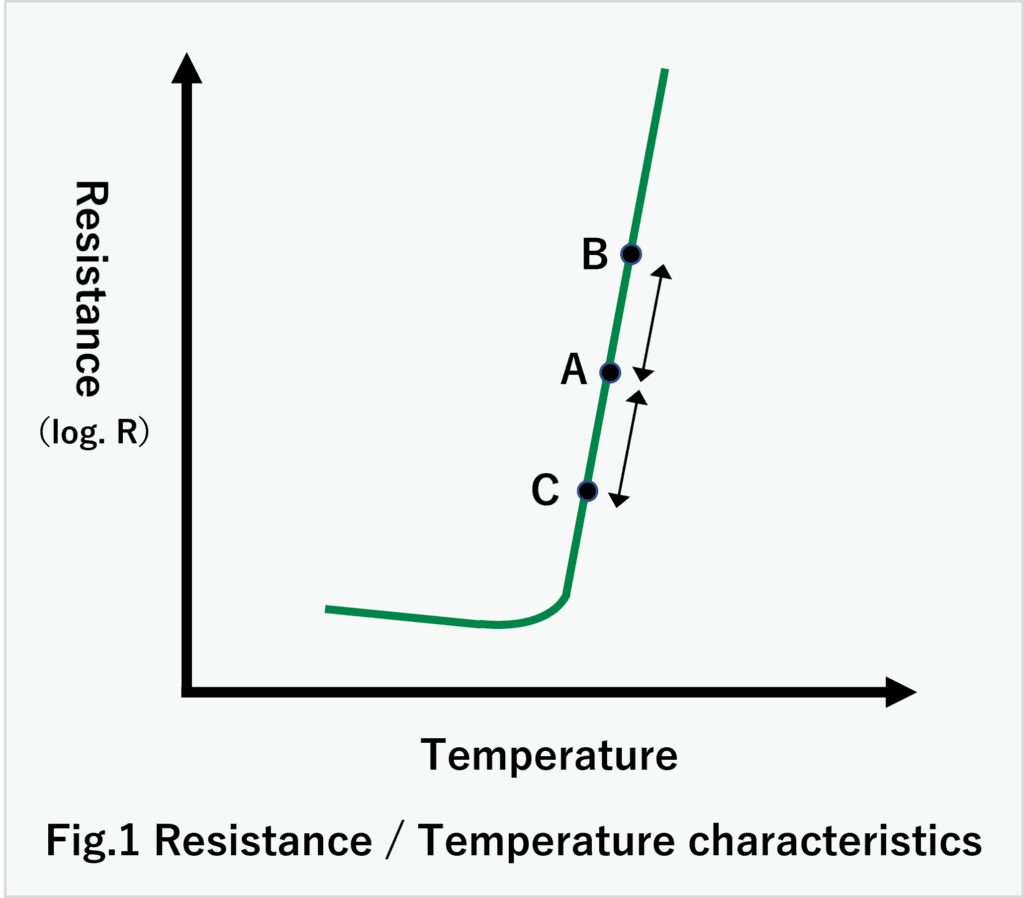
We would explain on Automatically Temperature Control Function with T-R Characteristics in Fig.1
Now, PTC is operated in steady state at point "A". Under this circumstance, applied Voltage and/or ambient Temperature is to be increased, operating point is to be moved from A to B and Resistance is to be increased by Temperature increase then Current become smaller , concequently, operating point would be backfrom B to A.
The other way around, in case applied Voltage and/or ambient Temperature is to be decreased,PTC temperature is to be decreased then operation point move to C, then PTC resistance is to be smaller according to Temperature decreasing, operating point back from C to A.
According to the above,almost the constant temperature is to be kept in spite fo any change of appling voltage and ambient Temperature.
Addition to the above, Automatical Temperature Control Function of PTC would be explained by Voltage-Current Characteristics in Fig.2 PTC shows almost the constant Electric Power(W) excess the Voltage(V-I Peak).
Therefore, the Tempereture is to be almost the constant due to constant electric power against any applied voltage excess the voltage (V-I peak). In the meantime, V-I Characterisics shows the following status according to the ambient Temperature. V-I curve shows as ℓ1 at Fig.2 in case the ambient Temperarure is higher side. V-I curve shows as ℓ2 at Fig.2 in case the ambient Temperarure is lower side.
Thus, if the point A is steady state at applied Voltage E, the point will move by the Ambient Temperature change,i.e.,
incase the ambient Temperature is higher side, the point move to C(Electric power is lower)
incase the ambient Temperature is lower side, the point move to B(Electric power is higher)
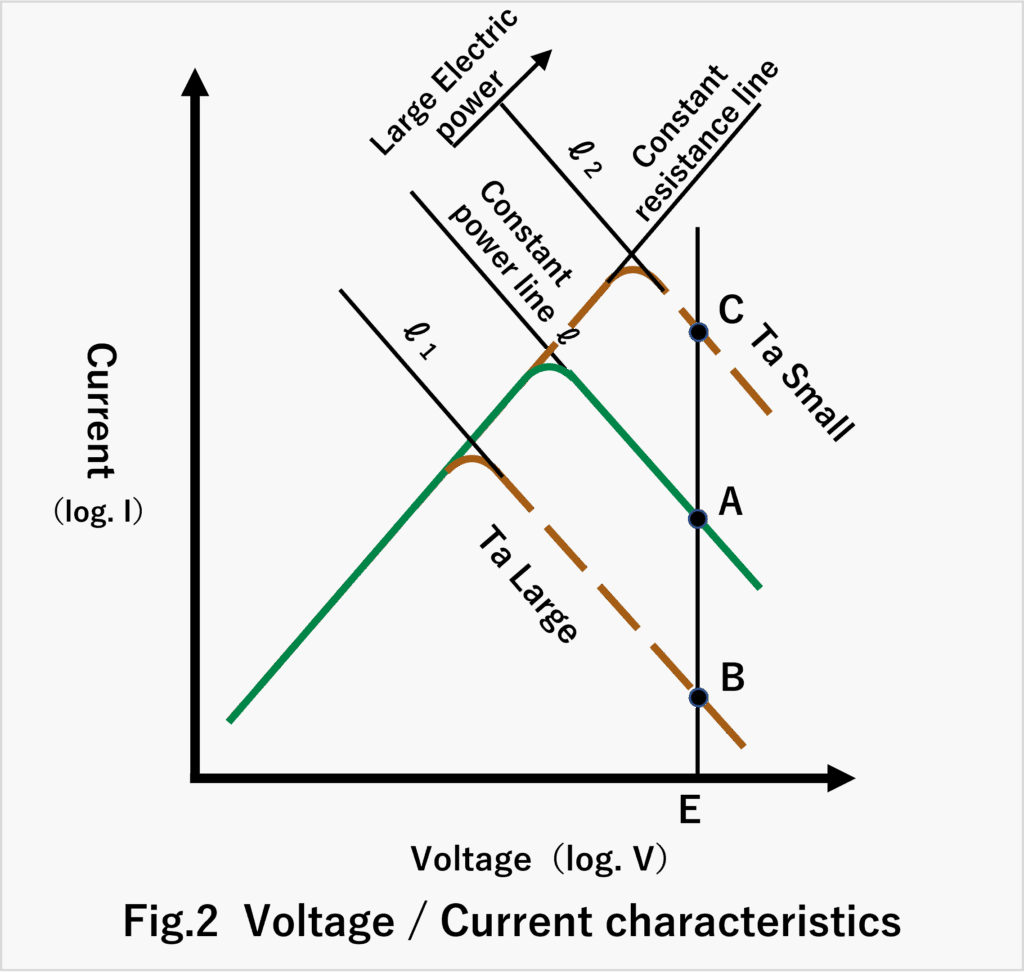
From the above explanation using T-R charasterristics asn V-I characteristics,PTC is to be kept as same temperature against valiable applied Voltage and ambient Temp. It means that PTC could have excellent Self-Temperature Cotrol Function.
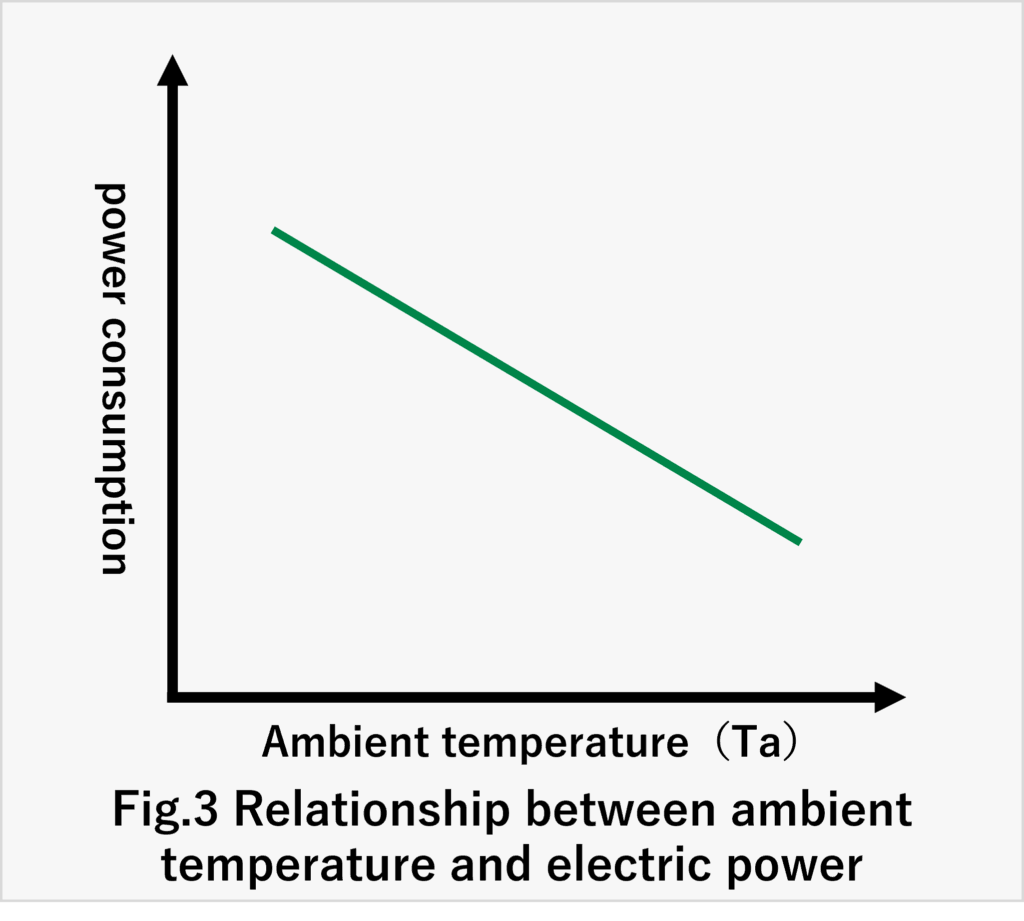
Fig.3 shows relation between the ambient Temperature and electric current
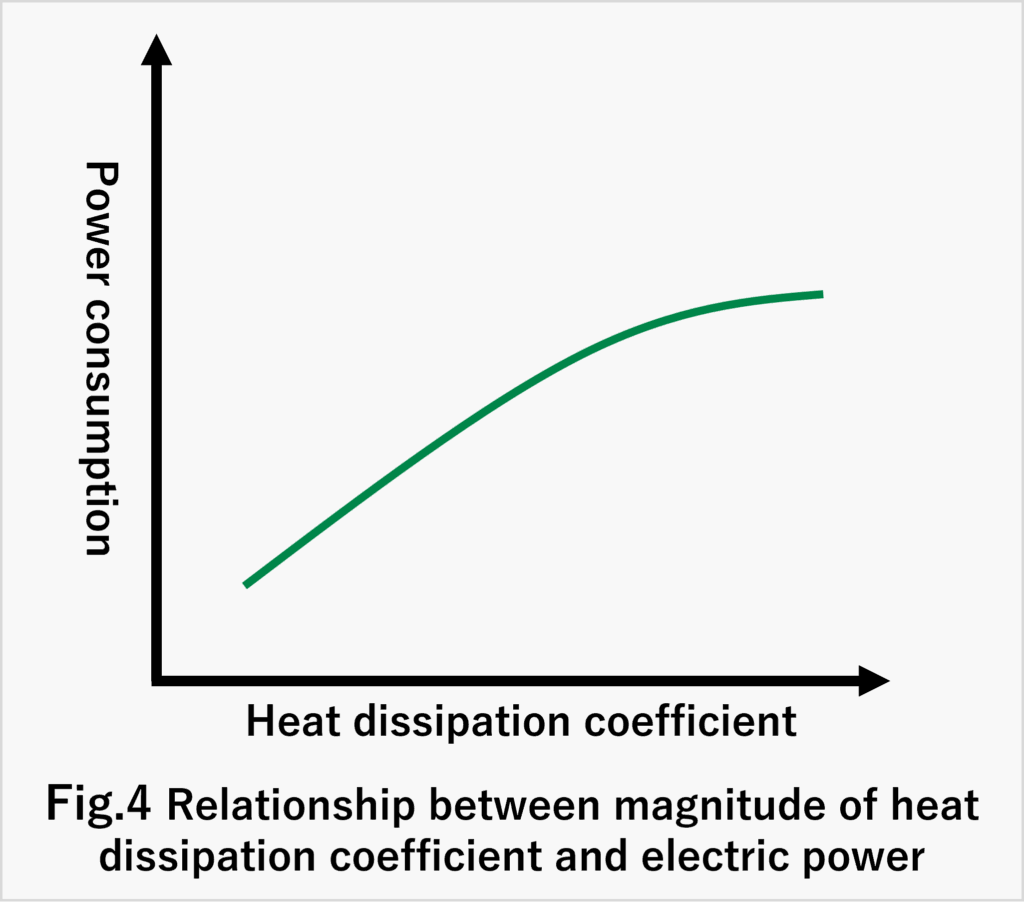
Fig.4 shows the relationship between PTC load magnitude and power.
Heating Characteristics(Heating time)
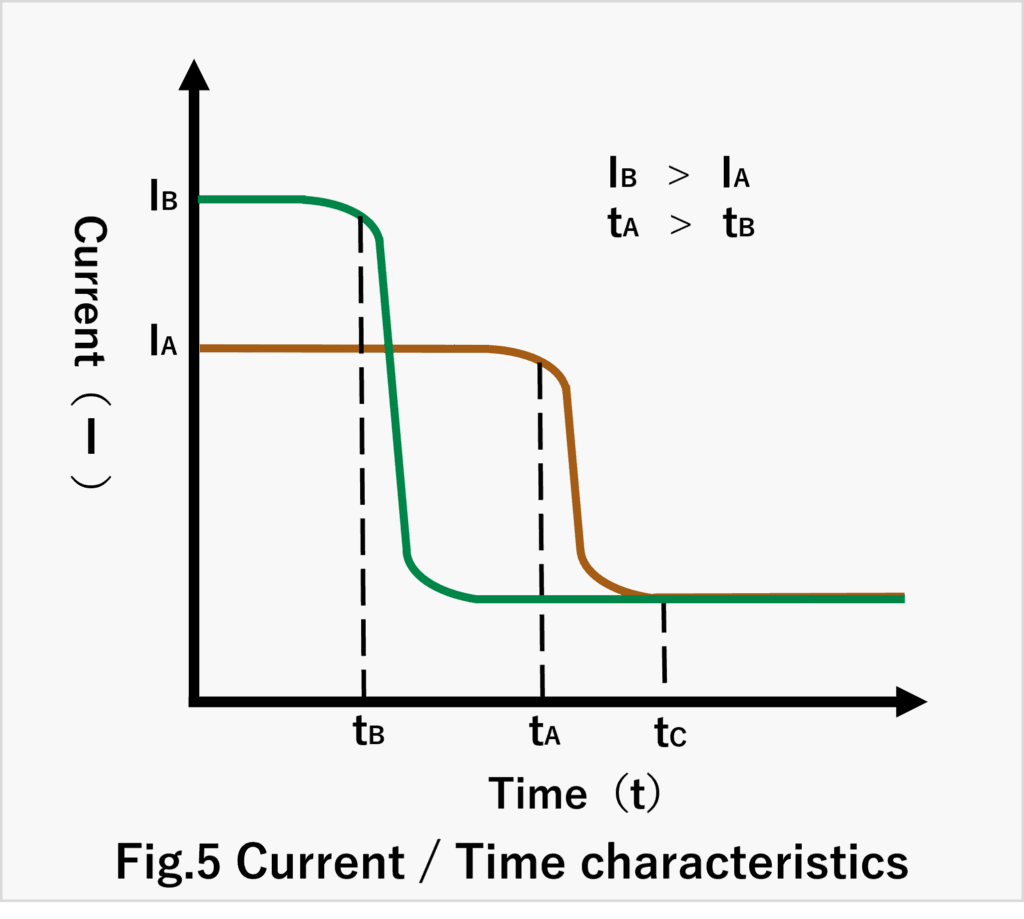
Fig.5 shows Ttime-current chararisics curve for smaller resistance(B) at room temperature(RT) and bigger resistance (A) at RT. The rush current for B is bigger than the same for A but attenuation time for B is shorter then the sam for A. Less than ta , heating time for B is shorter than the same for A. But total energy at time tc is almost the same for A and B and Heating characterristics is not different from A to B.
In case the ambient Temperature is to be lower, etc. at Fig.5,the attenuation time wolud be longer and Current would be bigger.

Contact Us
Feel free to reach out to us for any inquiries regarding our services or business. You can contact us via phone or through our online inquiry form.